From legacy systems to AI: Managing risk in financial services
Financial services organisations face growing pressure to modernise, adopt AI and deliver faster, while maintaining security, regulatory compliance and customer trust. Building quality and risk management into transformation from the start helps leaders make progress without creating unnecessary exposure.

Overview
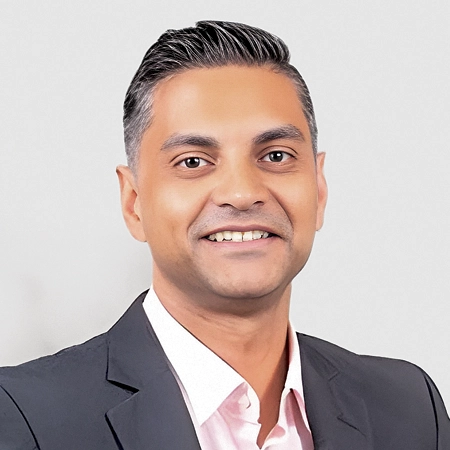
In Episode 2 of The Quality Edge, host Reg Prasad is joined by Steve Jennings, Chief Innovation Technology Officer at FirstCape, to discuss how financial services leaders can balance innovation with risk.
Steve explores the challenges of modernising legacy systems, adopting AI responsibly and managing transformation in a highly regulated environment. He explains why quality, security and risk need to be considered from the beginning, rather than treated as checks at the end of delivery.
The conversation also covers AI maturity, security guardrails, organisational change capacity, project governance and the importance of aligning technology decisions with wider business goals.
Key takeaways
- Build quality and risk into planning. Testing, security and risk management should be part of transformation planning from the beginning, with clear measures for what good looks like.
- Modernise at a pace the organisation can support. The scale and approach of transformation should reflect the organisation’s capacity for change, including access to subject matter experts and business teams.
- Create an AI maturity roadmap. Start with clearly defined use cases and measurable goals before progressing towards more advanced AI capabilities.
- Establish AI guardrails early. Security, regulatory requirements and acceptable levels of risk should be defined before AI adoption expands across the organisation.
- Treat AI as a business capability. AI strategy should be connected to wider business priorities rather than managed as a standalone technology initiative.
- Apply lessons from previous technology shifts. Established approaches to cloud adoption, governance, cost management and project delivery can help organisations manage many of the challenges created by AI.
- Align teams around shared goals. Developers, security teams, quality professionals and business stakeholders need a common understanding of priorities, risk and expected outcomes.
- Use time, cost and quality to guide decisions. Making trade-offs explicit helps leaders understand the impact of moving faster, changing scope or accepting different levels of risk.
[00:00:01] Reg Prasad
The financial sector is facing a massive shift. On one hand, there is a push to modernise, adopt Open Data, and bring AI into the enterprise to drive innovation. On the other hand, finance is an industry with very strict rules, where a single data leak or system mistake can cost millions and break customer trust.
Now how do you balance the need to innovate with the absolute need to keep data safe?
Welcome back to “The Quality Edge”, brought to you by Assurity Consulting. I’m your host, Reg Prasad, and joining me today to answer this question is Steve Jennings, the Chief Innovation Technology Officer at FirstCape.
Steve is joining us to share his deep personal expertise as a seasoned leader in the financial services sector, where managing risk isn’t just a checklist it is the core of the business.
Today, we are looking at how to build quality into one of the most strictly regulated industries in the world.
Steve, welcome to the show.
[00:56:08] Steve Jennings
Really pleased to be here and looking forward to getting into it.
[00:58:22] Reg Prasad
Yeah, nice. Thank you, Steve.
Now, before we get into the heavy world of tech and risk – exciting topics we want to always talk about – I hear that you, when you’re not managing massive enterprise transformations, your passions are music, playing guitar, and combat sports.
Is there any crossover between the discipline needed for combat sports, or mastering an instrument, and what it takes to run an enterprise tech?
[01:22:17] Steve Jennings
You know, strangely, I think there is. When you think about those things, one of the commonalities they all have is that they’re all highly technical, particularly when you want to do them well.
I think the depth of proficiency comes from asking why. It’s not just learning a technique, or learning a single chord or a note. It’s asking: why is this important? Why does it matter?
When you start to take the time to understand those concepts, then you become so much more effective at doing it. And I think that’s something that really translates through to tech as well.
We get that classic “see the forest for the trees” conversation going, and I think it translates really, really well.
[01:56:15] Reg Prasad
That’s a good way to kind of round it off in terms of all the risk, especially given the agentic world we’re moving into. You know, everyone’s rushing into it, but it’s always about putting the structure in learning it properly, and getting used to the, you know, how to roll it out.
So, do it once and do it right sort of analogy.
[02:15:10] Steve Jennings
Yeah, absolutely. You know, you mentioned the word risk there as well, and I think that’s a big part of it as well. When you think about tech transformation, having a risk slider – what is your acceptable palette for this type of risk – also translates back into that background as well.
Am I prepared to stand still while a sword is swung at me, or do I want to have a more risk averse approach?
I think that all plays part of how those thing’s come together.
[02:38:05] Reg Prasad
Now, if we get into the reality of your sector, if a retail tech leader pushes out a bad update you might lose a few sales, right? But in wealth management, a bad update is regulatory disaster.
Now, how do these strict industry rules fundamentally change how a CTO should approach tech delivery and quality from day one?
[03:02:09] Steve Jennings
Yeah, sure. I mean, look, I think, quality is absolutely critical, in our industry, and I think particularly it’s about that trust.
You quite rightly called out, I think, in a smaller retail business, a couple of sales doesn’t necessarily erode that, but in a wealth business, something material like that can cause so much damage. And I think that’s true for a lot of the financial services industry.
For things CTOs should consider in those sorts of spaces and challenges comes to planning early, planning to test your rollout, not letting it be an afterthought.
I think understanding what good looks like, where are the pressure points, and how much risk is the business willing to accept as well. Not separating that, hey, this big delivery or whatever it might be isn’t isolated to a technology problem. It’s part of something the whole business needs to be on board with. I think having those conversations early up front, making sure, as I said, testing and quality, not an afterthought. They’re actually part of the planning right from the get go.
Do a lot to try and I guess cement a far smoother transition, a far smoother implementation, deployment, whatever it might be.
[04:04:03] Reg Prasad
Yeah, look it’s great to hear, you know, obviously from a quality or testing side of things. Certainly for many, many years used to be simply a tick box exercise. That’s great to hear, you know, from your perspective in terms of the transformation side of things, it’s becoming more and more prevalent in terms of building it as part of that.
So, you know, having the quality, the confidence, and trust, going into things, you know, with your eyes wide open.
[04:32:00] Steve Jennings
You know, and I think that’s something that as technologists, we think about sometimes technology runs its own stream separate from the business and really trying to join those two things together and making sure that we’re having those conversations together as a business.
And I guess, you know, as technologists, we’re also understanding where those levers are and really applying our expertise over the top of that to help us make good well-informed decisions.
[04:54:15] Reg Prasad
Yeah. Hey, I’m going to talk about legacy and modernisation.
Obviously, you know, the fintech industry has gone with legacy stack for a long, long time. Moving to Cloud Stack and, you know, going through the dev ops cycle now, coming to modernisation, a whole bunch of changes going on. So, large scale transformations are happening right now.
Now, from your experience, how can take leaders modernise legacy systems without introducing unacceptable levels of risk during the transition phase?
[05:26:06] Steve Jennings
Yeah, it’s a really good question. Not always something easily done. You know, sometimes there is an inherent level of risk with a type of technology or a type of problem.
A migration might be a big bang. It might be incremental. And so I think the first thing is probably the size and scale of the organisation. It’s probably going to dictate some of that answer. I said, I think understanding to that earlier point, being clear on your quality measures up front is a really great kind of way to think about that. And also understanding the organisations change capacity. So, what I mean by that is when you start to get into how many things can I do at once, or what size and scale can I tackle? You’re always going to need business SMEs.
You’re going to need people who are on the ground who know these things. And if your organisation is say, let’s say it’s a 50 person organisation, you can’t add another 50 people to that organisation and get economy of scale.
You can probably add ten, but you’re really going to start to max out the SMEs and the business change capacity. And so I think, thinking about that, planning that, and setting up ceremonies that are going to, I guess, bring in traditional things that are good for just general project delivery.
You know, having good project governance, having a SteerCos, having the right forums to help make sure the right people are involved in those decisions. Things don’t just turn up out of the blue.
So look, I think there’s a lot we learn from just, you know, general project cadence and good management. But I think there’s no one size fits all. There’s always a unique view based on the type of change and the size of organisation. But again, you know, having those upfront conversations, thinking about those things, and being able to get a good steer around what this looks like as a whole is absolutely key.
[06:58:10] Reg Prasad
Now just keeping on the theme of strategy and governance. Let’s talk about AI right. Topic everyone’s always talking about right now. In terms of executive board wanting AI. But opening up enterprise data systems to these tools obviously is going to bring massive risk, especially from a financial sector side of things.
Now, I want to look at these from a few different angles. Now, first, how should tech leaders, lock down the actual problem statement of AI, so you know, it actually delivers real value instead of just being, you know, just another shiny toy. Like, you know, we’ve gone through many, many phases of things the, over the last 10 or 20 years. And then secondly, how do you ensure security is built into these systems from the start?
[07:44:09] Steve Jennings
I think for me at the moment, putting together a maturity roadmap is a good way to start that exercise. You know, the maturity roadmap, thinking about AI, for example, I think of it in terms of, assistant AI being that first kind of level of maturity, moving into a genetic AI, moving into maybe virtual team members, active AI. And so thinking about those kind of maturity layers, have a roadmap around where you want to play, understand and time box some goals.
So, you know, as newer organisations adopt AI, you want to be able to have a little bit of play around with it. You don’t just want to make all your decisions up front and be set with them, especially given how dynamic it is.
One minute we’re swapping between, you know, Claude back to GPT, back to whatever is out tomorrow. But I think having that kind of maturity roadmap is a great way to think about it. And it’s a great way to start putting it thinking in place around, okay, well, here is what we can see in front of us. And here are the measurable goals that we want to get out of it.
So, you know, time box something maturity level one assistant, we expect our employees to gain 20% improvement on finding information, and we’re going to do that this way. Really simple really basic example. But it’s a good way to kind of prove the concept and to kind of play around with that in a safe way before you move into more advanced things.
[08:56:00] Reg Prasad
And obviously, you know, from a security side of things, AI is still a very scary topic in financial and insurance industries. So, how do you kind of work that in, in terms of, embedding AI into your organisation?
[09:11:15] Steve Jennings
You have to build your guardrails early. Managing risk has to be part of that conversation. You know, we obviously are encouraged to act quickly because there’s so much happening at once. But obviously for us in the financial services sector at the same time, you know, having those guardrails, understanding the regulatory direction and what our expectations are and kind of setting that before we go too crazy with various tools is a great way to start. And I guess understanding the tools themselves, so, where we can put those guardrails into the platforms.
Those are great platforms for us to start with in our industry, as opposed to ones that are kind of a little more rogue. So I think that’s kind of one key part of it. The other is, is also making, I think, AI part of your business strategy, not treating it as a tech strategy or as a tech thing. You know, it’s a business thing. It’s an enabler that we get to use across the board. And so when we understand that broader business requirement, you know, when let’s say, we develop an AI team, that team is going to be focused on maximising value from AI.
That team should understand what the measures are, what the controls are, and what the levers are in the business environment we operate in. And so making sure that those two things come together, I think, is again, absolutely key to being able to have good, sustainable, safe and secure interactions with AI.
[10:20:15] Reg Prasad
I think those are really, really key critical, I suppose factors that, you know, any board should consider rather than just implementing AI. And, you know, you spoke about economies of scale, but you know from a team perspective, you know real people, now economies of scale using AI. Now, for us, you know, we don’t see AI replacing humans, right?
It should be more experts with AI. If you look at from operational perspective, and advising handling the unpredictable nature of AI when it comes to budgeting, compliance, and token management, how do you kind of build all that at an operational level as well?
[11:00:09] Steve Jennings
Yeah, it’s such a good question as well. Something so many organisations are facing into the thing for me is to remember that this has been done before. So whilst the AI dilemma not necessarily, but when cloud compute became more of a challenge, and we started having to think about our computer usage, our burn, there is a pattern there already, so we don’t have to start from scratch. I think we can take the learnings to practices, the hygiene that we’re already familiar with.
It’s already established, and use those things and apply them over the top. And I think, the word AI comes up, and sometimes we kind of forget, actually, we know these things. A lot of the stuff isn’t completely brand new.
There’s some great things we can do with AI, but actually we need to kind of remember what we’ve done before. Leverage that, build on that. I think the other thing that’s quite interesting as well is, as you do navigate that challenge of so many AI providers and trying to pick the right one or combinations of them. Having a kind of primary provider of choice really helps with that.
So you can kind of start to go, you know, here is our broader tool that we’ve kind of invested more into. But we understand, how it can operate.
We’ve got probably a more preferable deal with who the provider might be. And not just trying to apply that on blanket to everything, trying to have your kind of provider of choice and just layering it with probably the final part, which is just, you know, training, training, training. So important.
[12:13:17] Reg Prasad
Now let’s talk about data privacy and team culture side of things. Now obviously, you know, moving from legacy stack to, to modernisation. You know, AI’s there. But another key is data, but also the protection of the data side of things. In financial sector, it’s everything right. Now, protecting it requires a massive cultural shift, moving just from testing at the end, to building quality from the start.
What is the biggest challenge when trying to get developers, your security teams, your QA professionals to actually work together to protect data and manage risk?
[12:48:13] Steve Jennings
Yeah, look, I think the size of the organisation will impact that one as well. And I think the type of organisation. For me in that kind of typical Kiwi, probably enterprise, small enterprise sort of market, it’s a simple, as clear aligned goals. Technology for me, unless you happen to be a SaaS provider for most businesses, is an enabler that follows suit or priorities.
It’s a thing to help make the business more successful, to help accelerate and enhance what it does. And so I think really again, going back to that comment I said before around, you know, business strategy and aligning those two things, I think that’s really valuable.
I think the other thing is as well is that, as I alluded to earlier, you know, how to link the business environment to the technology environment and make it meaningful.
So those two things go a long way. But obviously there’s, the usual sort of things that you would have in place. You know, how have we encouraged tech teams to work nicely together over the years already? You know, yes, aligning goals is one part of it.
The other is with rituals, stand ups, that sort of thing, and whatever suits. But making sure you’ve got the right cross team coverage as part of that. And, and for me, I’m quite a fan of the kind of quarterly strategic sort of check-in for everyone. So you kind of get back into the hey, just a reminder, here is what our core strategy is. Here’s how we’re working.
Here are our priorities. And here’s what that turns up. I think it’s always just a nice way to reinforce that and overlay, you know, the typical things we’re used to seeing.
[14:05:07] Reg Prasad
Yeah, absolutely. And once again, key fundamentals of ensuring that culture is also built through the transformation goals as well. Right. Because people are the success of actually getting a transformation in go live side of things.
[14:20:14] Steve Jennings
And I think that’s, you know, again we see that quality theme turn up here as well. So making sure everyone’s really clear on what that quality metric looks like and having good measures and mechanisms in place to help push that forward. just so, so important that those things are not afterthoughts. We’ve seen for so many years, security, know, quality.
You know, even in some rare cases, risk management has been the afterthought of trying to get something done. And I think that shift, particularly in the financial services sector, as those things have to be the leaders almost, of how these things come together.
[14:49:17] Reg Prasad
Hey Steve, so to wrap things up, always like to end up with a quick fire question to leave our listeners with some practical advice. Now for tech leaders listening right now who are struggling to balance strict risk rules with the pressure to deliver faster.
What is one change they need to make today?
[15:09:08] Steve Jennings
Well, I think probably a theme you’ve heard me mention as well, break it down to a business decision. I think we’ve got that classic time quality cost triangle.
Leverage those things. You know, make sure you don’t just sort of present, hey, it’s only techs problem to solve. There is a core goal here we’re trying to achieve. And, you know, it’s something that the business needs to be on board with.
It’s something that is part of your business strategy, and I think break it down in those terms. Hey, you know, you want to go faster, well, here is a quality. Here’s the time and here’s the cost impact of those things. And so you have those conversations in those terms.
You can create those sliders, those parameters, and encourage people to understand what those are and where they’re happy to sit. And that will then drive your outcomes.
So if we say that, hey, look, cost is a fixed element, and we’re prepared to compromise time or quality. Well, then there’s your answer. And so I think tuning into that classic triangle is just such a classic way to solve the problem.
[16:00:01] Reg Prasad
Yeah, absolutely. And look, I think, these are some, you know, really key themes that any transformation, regardless of any industry vertical. In terms of the fast paced world we’re moving in at the moment. But, you know, just your thing around being able to make business decisions. But the involvement from top to bottom is really, really key. But, you know, your call us around time costs and quality.
I think those are critical areas that, you know, sometimes leadership or, you know, senior leadership teams don’t actually spend too much time on. And that causes a lot of backlogs. Would you have any more insights around how to manage some of those deliverables more tightly?
[16:47:01] Steve Jennings
I think this is another example where we can take all the great learnings we’ve had of good project governance.
You know, these are common challenges and projects, transformation projects or otherwise. And I think in that space, you know, you’ve got those same sort of things, you want to break them down to tasks, you want to have dates, owners. You really clear on those classic hygiene things like your RACI. The things that are going to help move each item forward.
Do it within, I guess, a scale that fits your business change capacity. And I think, again, you know, using all of that kind of classic project hygiene and realising again, a lot of these things are not new. They’ve been done before. So leverage what we can and make that your aid to help deliver things, I think is my approach to it.
[17:25:09] Reg Prasad
That’s perfect.
Hey, Steve, thank you very much for sharing your industry insights and your perspective of navigating AI and risk in the financial sector.
[17:35:23] Steve Jennings
Thanks for having me Reg.
[17:37:18] Reg Prasad
And that’s all the time we have today.
It’s been great hearing your practical advice you’re giving, you know, and just kind of walking us through all the key elements we should be looking for.
Now for our listeners, if you want to learn more about building a culture of quality from day one. Head over to assurity.nz.
I’m Reg Prasad. Thanks for listening and we’ll catch you next time on The Quality Edge.

Is your platform built on a quality-first blueprint?
Don’t wait for a high-profile failure to find out. Assurity’s Quality Engineering experts can help you shift left, embed quality from day one, and de-risk your next major rollout.
Request a QE Maturity Assessment